
The Last Lesson – a homeschool mom’s final chapter
Raising Youngins podcast w/ Margie Hester
TESSA: Hey mama, welcome back to the Raising Youngins podcast. Take a deep breath with me. Inhale… exhale.
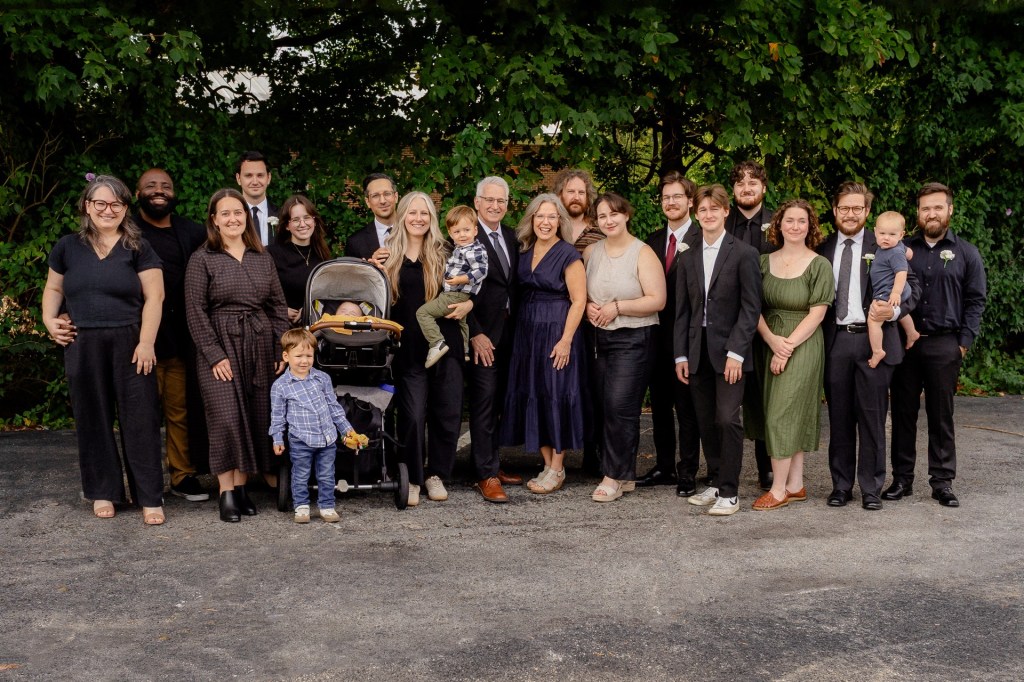
Today we’re talking with Miss Margie. She’s a longtime family friend. This beautiful lady has 12 — yes, 12 — kids. She’s homeschooled all of them, and she’s here to chat about motherhood, parenting, adult children, finishing up 30-plus years of homeschooling — and now she’s even a Grammy, enjoying multiple grandbabies. Hi, Miss Margie!
MARGIE: Hi!
TESSA: To start out, will you give us a brief overview of your family unit? And I’d love for you to name all of your kids — name them all.
MARGIE: Let me do that inhale-exhale thing first. (laughs) I’ll go through them fast.
MARGIE: Rebecca, TJ, Sarah, Joanna, Michael, Lydia, Joshua, Steven, Julia, Jon Mark, Daniel, and Samuel. Rebecca is married to a wonderful man and has three beautiful boys — my grandbaby boys. Steven, our eighth-born, is married to a beautiful woman, and they have a 15-month-old boy. And Sarah’s also married to a great guy, Sean.
TESSA: That’s fun. That’s what your family looks like right now — just adding to the number. I love it, and just the goodness of a big family. So: 12 kids, decades of homeschooling, and you’re finishing up with Samuel right now.
TESSA: If you had to describe this season of your life in one word, what would it be?
MARGIE: This very long season? I would have to say happy. I could also say busy. I could also say hard. But really, happy would be the main emotion, because it’s been a joy and a pleasure. I also remember crying and being frustrated and feeling quite inadequate. But it’s all been heavenly.
TESSA: When you’d end the day and think, “That was a good day of schooling” — what was that like? What made it a good day?
MARGIE: A good day was if I didn’t lose it on anybody. (laughs) My personality lends toward being pretty flexible. But when they’re little, you feel like you need to be in control, because you’re keeping children alive — you have to have some measure of control. Also, if they were getting along well. That’s really the thing that would affect me most: if they treated each other poorly, or were mean, or exclusive. How they treat each other impacts my emotions greatly.
With homeschooling, we started out with a program that had a lot of flexibility in it, and being as flexible as I am, I needed a little more structure. When we made a switch about halfway through our family, it was so much better. I felt like I was doing a better job. Those older kids went on to college and were successful, so I don’t feel like I failed them. But I do kind of wish they’d had what the later kids had. It made me more accountable, and I felt better about our homeschooling. We’re still in it — Samuel’s a senior this year. But a good day to me is one where we all went to bed and loved each other.
TESSA: Y’all love each other. Especially with so many in the same space — with mine, they split up at school, so they get a little break from each other. How did you handle the arguing and fighting? Mine love each other so much, but they also cannot stand each other. The big insult is, “You’re not my best brother anymore!” And I’m like, he’s your only brother.
MARGIE: I think I learned to overlook some of that stuff, because every family has it. You have to let them have some conflict. But there was a lot of, “Okay, come over here. Tell them what you did, and then tell them you’re sorry, and ask, ‘Will you forgive me?’” That was a big thing. Some of that is just repeating the words, but it’s training them in what’s right. And they’ll turn around and be having a good time a few minutes later — it’s not going to ruin their day.
When it was more serious, I’d end up sitting on a bed across from a son — hypothetically — and it could be a long time, trying to help him see what was wrong about what happened. Sometimes I’d come out of there thinking, “I think we’ve broken through.” But I learned that the things you wish you could fix with the right words — “they understand now, and it’ll never happen again” — it’s never that way. It’s a process, and then you get up tomorrow. And how many times did I have to apologize to a kid? So…
TESSA: Everything’s a long game. I feel that with me apologizing to my kids too — their conflict and my patience. So many times I’m like, “God, You’re so good to me,” thinking about how many times I’ve annoyed Him with my impatience, or my arguing back: “No, that’s actually not how I see my life going.” And really, I don’t have control. There’s a Parent over me, telling me, “Actually, we’re going this route,” or, “You’re not doing that, because that door is closed.”
MARGIE: I remember walking back into my house one time. We were all loaded up in the van — we probably had eight to ten kids at that point — and I’d gone back in to get something someone forgot. We were already running late, and it was so annoying. I walked back into my house and just looked up toward the ceiling. I can’t remember exactly what I said, but it was something like, “I am so glad for Your grace.” I’m so imperfect and make all these mistakes, and I’m just so grateful for God’s grace. Every day. Every hour.
TESSA: Speaking of God — and screaming out to Him sometimes, hypothetically — how has your relationship with God changed from Rebecca to now with Samuel and the grandkids? What has He taught you, maybe even in the last few years?
MARGIE: I look back and think about how I had these ideas of how life would be. The life of faith was something you could wrap up in a box and put a bow on. I remember when [a well-known Christian leader — name unclear] got divorced, and I thought, “How could you do that? All these people are looking at you, and you’re not showing Christ.” I thought people should stay married and work it out.
Well, there was a lot I didn’t know. I had a mom and dad who stayed married — there were difficulties, but they stayed married. My husband came from a very broken family, but he was determined to stay married. So I had a husband who was humble, who served me and loved me the best he could, and I didn’t understand a lot of what happens out there in the world. It takes two people to make a marriage work.
I’ve learned a lot about how God’s grace is so much greater than our ability to check all the boxes. Even with our kids — I’m not naturally the most organized person, which I think has actually been good for embracing 12 kids, because things change quickly, all the time.
When I came home from the hospital with our first baby, they said, “Feed her every four hours.” So people would say, “I think she’s hungry,” and I’d say, “Oh, it’s only been three and a half hours.” (laughs) I was so stern about it. She got fat — it was fine! But there were so many things about parenting I thought were easy.
And then, especially being in lay ministry at first, and now my husband being on staff [unclear], you find out people have situations you’ve never encountered. I remember thinking, “Well, if you just are honest with your husband and tell him how you feel, I’m sure you’ll be able to work it out.” No. There were people with so much past hurt. Some were married to bad guys. Sometimes people have their own hurt and they can’t hear it that way. There’s a lot of nuance — their parents, and their parents’ parents.
As our children have gotten older, they’ve made different life choices than we made. We’re so blessed that all our children profess faith in Christ. But there are lots of decisions in life, and some of theirs are different from ours. So I’ve been learning how much grace there is for people to interpret Scripture differently. If I had to choose a word for it — and that’s not my favorite thing to do — it would be grace. I feel like my relationship with Christ has grown in grace.
And the relational part of it — how many times did I kneel by my bed to pray with a toddler on my back?
MARGIE: It’s not exactly the picture you see of a mom quietly holding her little child’s hands. Even this morning, I’m listening to my Bible, and I keep pausing it because I’m getting asked questions. And I’m like, “Stop! I’m listening to my Bible!” And then I think, “Okay, that wasn’t very Christian — getting angry with my children for interacting with me.” And then there’s the shame. But somehow we get through all that, and God loves us.
TESSA: I love the illustration that God always met men high on the mountain, because that’s where they needed to be met, but God always meets women in the valley — they need to be met in a totally different way, in the hardship. Those are the times I’m like, He has so much grace for me. Even if I have a kid crawling over me, at least I’m thinking of Him.
MARGIE: Trying! So, yeah. I love that.
TESSA: Thinking about all your kiddos — with that many, how have you and Tim made each one of them feel known?
MARGIE: A lot of people ask me that — how do you stay connected with each one? People suggest, “Take each one on a date once a week,” and if I did that once a week, I’d — anyway. (laughs) We chose to homeschool, and I think we’d decided that before we even had children. That gave me a lot more time with my kids, so I didn’t ever schedule one-on-one time. I found it would come up — whether they were sick, or they skinned a knee, or we just found ourselves together running an errand. I might say to one, “Hey, I’m going to the store — come with me.” And it’s fun.
With my first three kids, it always seemed like such a hard thing to strap them all into car seats — and car seats weren’t nearly so wonderful 27 years ago. Taking them to the store was a big deal. Then once there were older ones, suddenly it was, “Can you stay home with the little ones while I go to the store?” And now I’m only taking one kid, and that didn’t seem as hard. So much of it is perspective and setting your expectations.
TESSA: I feel that. When I need to run an errand, I think, “I’d love to do this by myself.” And then Saralee is like, “Can we have some girl time? Can I go?” And I want my heart to want that — and of course I’m not going to tell her no.
MARGIE: And then you’re so glad. I’m friends with my daughters now. And I like listening to podcasts, but the only time I listen is in the car, and for years I’ve been in the car with a bunch of other people. So now I treat myself when I’m in the car by myself and get to listen to two podcasts.
TESSA: Do you ever just mute it and drive in silence? I do that sometimes.
MARGIE: Oh, sometimes, yeah — “I’m not required to listen. Maybe God wants to talk to me.” But at times I’d be tempted to think, “I can’t listen to my podcast — my kids are with me.” And then you realize, “My kids, who I love, want to talk to me.” And I never regret those times. I’m 61 now; there’s going to be plenty of time for my podcasts. I love that I get to have conversations with my kids.
That’s one thing I loved about homeschooling: I knew them. We were together all the time, and I was happy about that. I didn’t really know any other way — it’s not like they went to school and we decided to bring them home. I’m so glad we didn’t, because I don’t know if I would have lived through that transition. (laughs)
TESSA: One of my next questions was about all the transitions — college, moving out, grandkids — or even going from just you and Tim to Rebecca. What was one of the hardest transitions? Because two to three rocked my world. You’re probably like, “Oh no, ten to twelve.”
MARGIE: No, I’d say having the third, too. All my kids were about 17 months apart. Between Sarah and Joanna, we had a pregnancy loss.
And I always struggled with that, because the doctor said they needed to remove the “pregnancy tissue,” and I was like, “You mean my baby?” It didn’t diminish how open I was to a baby. [unclear] So those two were 21 months apart, and the rest were all around 17 months apart. I had three miscarriages between Daniel and Samuel, because I was in my 40s by then — I had Samuel when I was 44. I was turning 44 in a few days. And I had one more pregnancy after that which ended in miscarriage.
So, the transitions: when we had that third one — I can’t even tell you why — I have this memory of a day Tim came home from work, and I was on the floor holding the baby, with Rebecca and TJ with me, and all four of us were crying.
MARGIE: I remember that picture. I think that was the hardest transition, because Rebecca wasn’t yet three — she was turning three in December. Firstborns get so capable so quickly, but she wasn’t quite there yet. I don’t remember the whole season being like that — just that particular picture. After that, you can say, “Hey, I have to go to the bathroom, would you make sure the baby’s okay?” Or, “I’m going to shower very fast — just watch her.” You wait until the most rambunctious, unreliable one lays down for an hour. (laughs) Speed, routine, and grace through everything.
After having Samuel, my mom had to come live with us. It was an honor and privilege for her to come live with us, but it was a very challenging time. She was dying, and we had her in our house for seven months. That was probably the hardest time of my life — that stretched feeling. My sister was wonderful, but she lived in a different town, and my brothers were all far away. There were things we had to do for my mom that my boys weren’t going to do and my husband wasn’t going to do. So that stretch —
TESSA: Totally. And those are your last precious moments with your mom, too.
MARGIE: Yes. My neighbor said, “Kids are resilient; it’ll be fine.” And it was. When I was growing up, I never got to see what it looked like to take care of older people — we lived in a different town when my grandparents died. But my kids got to see what it is to honor and love. That was actually really good for them. At the time, though, it felt really hard, like I was being pulled in two.
And then the transition to adulthood — that was a learning thing too. “Hey, would you be able to take out this garbage?” I’m not going to demand it — they still live in your house, but it’s more like they’re visiting. [unclear]
I remember one of my sons was helping us shovel the driveway, and I said, “Here, here are some gloves.” He turned them down. And I was so mad, standing in the kitchen looking out at him shoveling without gloves. I knew he should wear them! And then it hit me: he is a man. Stop trying to treat him like a little kid. It was really funny, but I recognized I’ve got to treat these older ones with more respect and let them be who they’re going to be. So those are probably three different transitions I recognize.
TESSA: Thinking about taking care of your mom and feeling pulled toward your kids — in that season of chaos, how did you take care of you? And I want to ask about your marriage too, because I just admire you and Tim, together and individually. How did you really invest in and protect your marriage? There are times when Connor and I look at each other and think, “Do we like each other right now?” Like, I know we love each other — but we’re stressed, or there’s so much going on, and we haven’t had time to sit down without the kids.
MARGIE: This is true with kids and with your spouse: when you’re starting to be more irritated than enjoying them, it’s better to stop and pull close.
I remember one time specifically. We were in our dining room — this little house we lived in was a 1965 ranch, and we had 11 of our kids living there at the time. When we were all around that table, I’d think, “This is a huge house!” But when we were all trying to find space for clothes and dressers, it was pretty small. (laughs)
I remember walking around our table, by the wall, and one of the kids was hanging on me, tugging and whining. I was so annoyed with this child that I love. And all of a sudden I thought, “You’re annoyed because you’re trying to do this other stuff. Just give them some attention for a minute.” So I stopped, slid down the wall, picked up my child, and hugged them — which made me feel loving toward them. It was so disarming.
I know there are times when a child is acting out of character and you have to work on that. But this wasn’t that. They were getting in my way; I had things to do. I just needed to stop and pull close. And that’s true in marriage too. Sometimes you have to ask, “Why would I be finding this person annoying when they’re the one I love?” So we need to spend time together, because we love each other and want the best for each other. And we like loving each other. “Yes, I do like you — actually, I love you.” So spend that time together, give each other hugs, and remember: we love each other, and we’re going to enjoy each other. I think that’s super important.
When my mom was there and I was feeling stressed, we had to reach out for help. My sister would come up on the weekends she could — she had a full-time job — and that gave me a little respite. Then we got a wonderful company to help us. We have one day a week at co-op, so they’d come that day. But I realized that wasn’t enough, so they came another day too. I had a Friday group [unclear] that met at my house, and I could still do that with Mom there, because the helper was coming. That was really important. I hated needing help — I was supposed to be the one who could do it all.
TESSA: I’m sure that was hard. You’re thinking, “I have to love on my kids, and I can do this too.”
MARGIE: It was humbling. But I needed somebody there, because I was in the house for extended periods. And when you’re going through it, you don’t know how long it’s going to last. When it’s over, you look back and it was worth it — it was a short period.
I had conversations this past week with a few people — my father-in-law recently died, and I was talking with cousins and others — about taking care of two parents with Alzheimer’s for three years.
TESSA: Oh my gosh.
MARGIE: You’ve got to get help. Or you’re going to destroy everybody around you, and you’re going to become bitter toward them.
TESSA: Thinking about rushing through and then taking time to sit down with your kid and hug them — this always gets me. In the morning I’ll be rushing the kids out the door, and sometimes I’m like, “Go, go, go!” And then I think, “Goodness, what am I in a hurry for?” Well — I have to get to work. But I’ve been really convicted lately that my last word with them is me rushing them. I do have a job, but that part of me is at work, and this part of me at home is just to be there. So you’re convicting me again — which is great.
MARGIE: When I had my wisdom teeth pulled — I was in my 40s — they tell you there’s a rare chance of a nerve injury that paralyzes part of your face. So I started thinking about it, and I asked the surgeon, “I heard this can happen.” And he said, “Yeah, that can happen. But it’s very rare, don’t worry.” And I thought, “You’re not the one who’d live with it!” (laughs)
So for about a week before the surgery, I smiled at everybody. I thought, if it happens, I want my kids to remember me smiling at them. And I thought, boy — why don’t we do that all the time? Make the last thing they think of when they see us be that we’re smiling at them.
I also learned something from my son Steven. They might come and tell me something, and — I’m sure everyone’s done this — I’d answer, “You have got to be kidding me.” And Steven, bless his heart, explained that when I talked to them like that, it made them feel like I didn’t like them.
And I thought, “Well, of course — you just made him feel like a fool, like he’s making your life bad.” I appreciate that lesson so much, and that he came to me with it. It’s not about shame. We can correct people without shaming them.
TESSA: That’s so good. There are all those one-liners moms and dads use that I know hit them to the core — and honestly, I’m mad, so that’s why I say it. That’s not the way I need to parent. That’s not how my short temper needs to come out on my kids. I want them to know their behavior was bad — they are not bad. They’re made in God’s image and all the good things.
MARGIE: And I’m really proud of my sons and daughters — now that they have kids, so often I see them take a breath and respond the right way.
TESSA: Speaking of grandbabies — how is it being a grandma? And your grandma name is Grammy! Grammy! I just thought it doesn’t sound old — it sounds cute. Grammy, to me, sounds cozy and safe.
MARGIE: Grandma just seemed — I don’t know. But when River, the first one, started saying my name, it sounded like “Mimi,” and I thought Mimi would be adorable. But Grammy is what I chose.
I remember crying together with one day in a living room, when we were still having children, and people kept saying grandchildren are even better, and we thought, “It had better be!” There’s nothing like holding your own child and having them fall asleep on your chest. But oh my goodness, it’s been fantastic. Four grandboys now — beyond our expectations.
And it’s true what people say: you get to hand them back. (laughs) Sometimes they spend the night, which we’re thrilled about. You don’t need a special room — we have a basket of toys, a puzzle table, a pop-up Pack ‘n Play. There’s no dedicated room, although now that fewer kids live at home, I could make one.
TESSA: I love that. Do you have any last wisdom for moms? You’ve given us so many good nuggets. I appreciate your time and your faithfulness to Jesus Christ, to Tim, and to all your kids.
MARGIE: There’s something I laugh about — a silly little thing. I remember being at a birthday party with Rebecca. We were trying to take a great picture, and she didn’t want to smile, so she was standing there scowling in the picture. I was trying to get her to smile, and I was so upset that she needed to smile for this picture. I don’t know if I thought it reflected on me, which is very possible.
I look back now and think, I should have just laughed — thought about how funny it would be for her kids to see that picture someday. We get uptight about things, and a lot of the time it’s because we don’t want people to think we’re bad parents. I wish I’d had a little more grace for my own kids than I did. So try to have a sense of humor.
Yes, there are things we’re responsible to teach them. Even to respect us — I may not feel worthy of respect, but God has us teach them to honor their father and mother. It feels a little self-serving, but that’s not the point. Teaching them to obey. But when Rebecca was little — our only baby — and wouldn’t swallow her medicine, you can’t make a kid swallow. And you can’t make a kid change their attitude that fast. You teach them, and maybe you have a talk later: “It would have been nice if you’d smiled for the picture.” But in the moment, why didn’t I just laugh about how funny it would be in the future?
TESSA: You said you learned so much flexibility along the way — and by Samuel, you’re like, “I don’t care.”
TESSA: I love it. Thank you so much for sharing your time with us today.
MARGIE: You’re so welcome.
TESSA: Mama, if you felt messy today — if you lost your patience, if your house looked lived in — you are not failing. You are being formed, and that’s holy work. Take a deep breath, mama. You’re doing better than you think. See you in two weeks.


Leave a comment